

Web Design
Customer expectations have changed dramatically over the past few years.
Most businesses think customers compare them with competitors.
And they’re right.
But today’s digital experiences have raised the bar far beyond direct competitors.
Today, businesses are judged against the best digital experiences people use every day.
When someone visits your site—whether it’s a business, portfolio, or e-commerce site—they expect it to be fast, simple, and easy to use.
They also compare the experience to the websites, apps, and platforms they use every day.
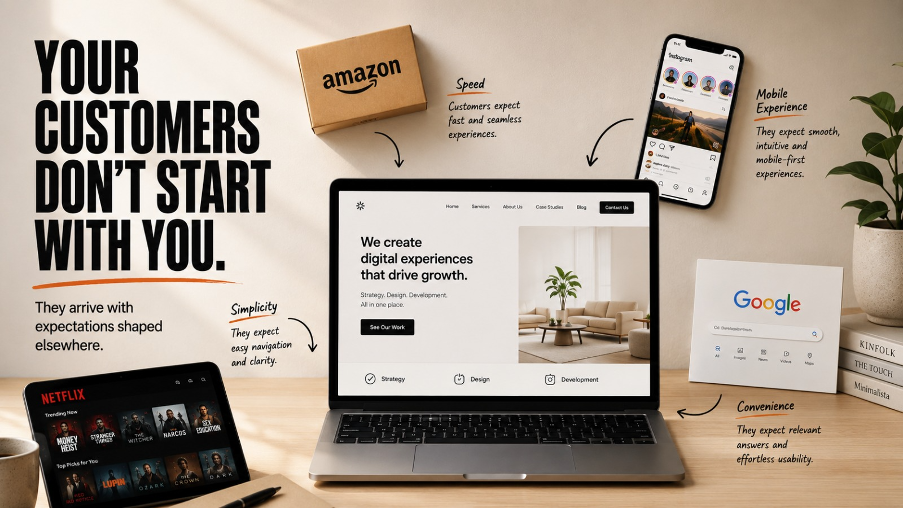
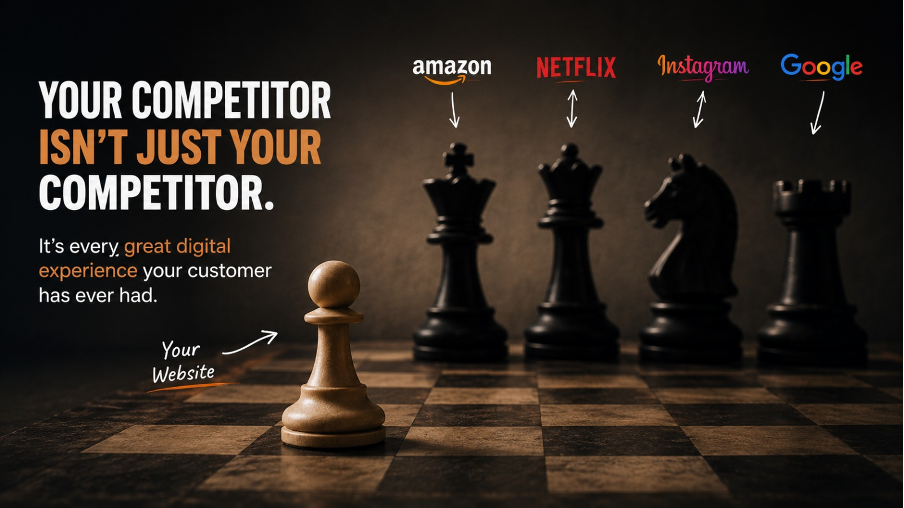
Amazon has defined what fast means.
Netflix has defined what simple means.
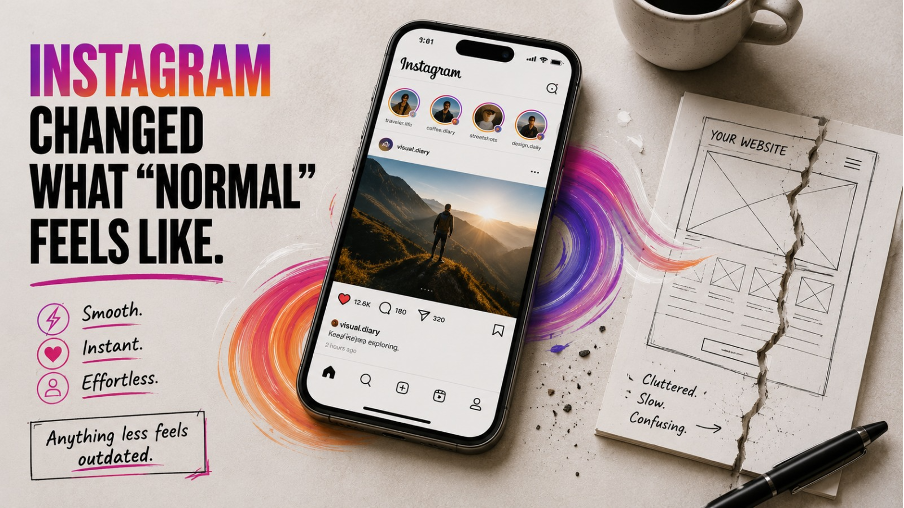
Instagram has defined what a smooth mobile experience means.
Google has defined what convenience means.
So when customers land on your site, they judge the experience against the expectations they’ve already developed through everyday digital experiences.
They judge it against the digital experiences they have already become used to, often without realizing it.
How Customer Expectations Changed for Website Speed
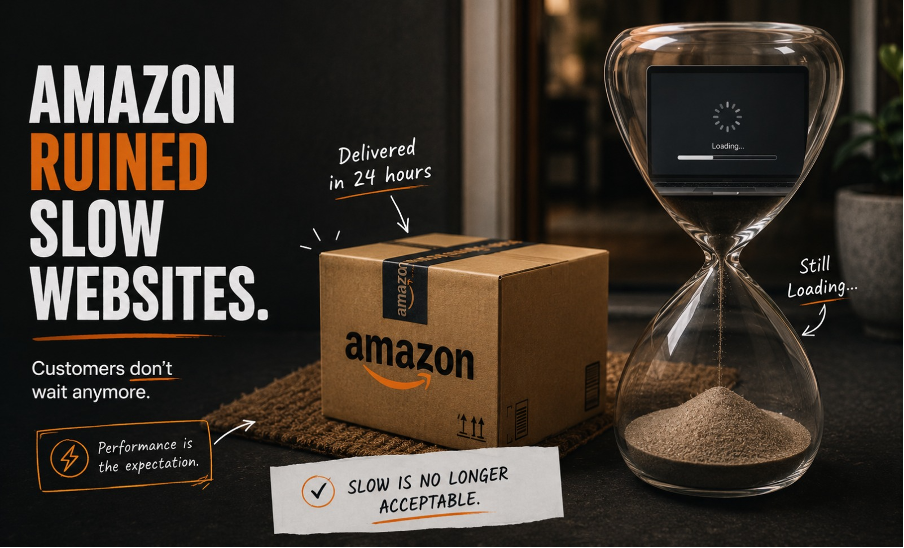
A few years ago, waiting 5–6 seconds for a webpage to load felt normal.
Today, it feels frustrating.
Why?
Because companies like Amazon have conditioned us to expect instant results.
According to Google, as page load time increases from 1 second to 3 seconds, the chance of a visitor leaving increases by 32%.https://business.google.com/ca-en/think/marketing-strategies/mobile-page-speed-new-industry-benchmarks/
Your website may not sell products like Amazon.
Fast loading has become the new standard because people have grown accustomed to instant digital experiences.
Why Simplicity Wins Online
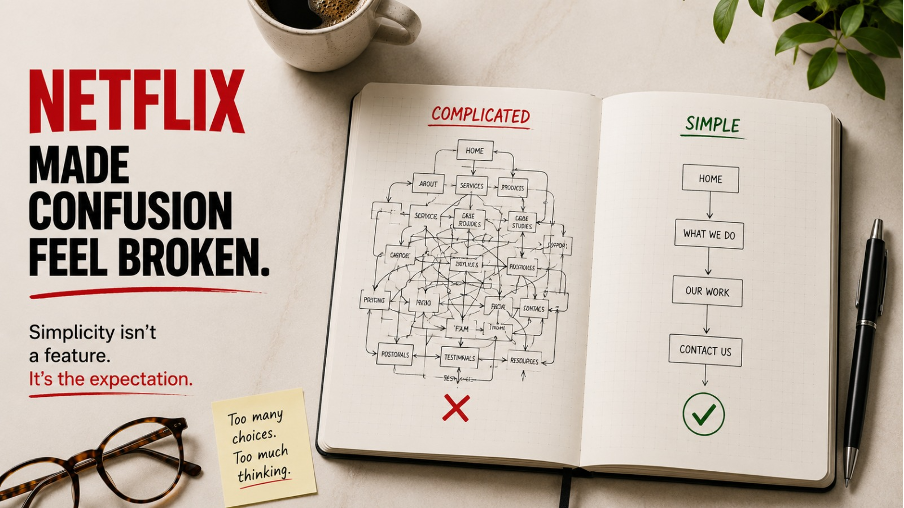
Think about Netflix.
You don’t need a tutorial to use it.
Everything feels obvious.
Finding the next movie is easy.
Taking the next action is simple.
Now compare that to a website with five menu layers, crowded pages, and unclear navigation.
Customers rarely say, “This website is too complicated.”
Instead, they leave because the experience feels confusing or frustrating.
Research in consumer psychology shows that too many choices increase mental effort and make decision-making harder. https://thedecisionlab.com/biases/choice-overload-bias
The easier something is to use, the more likely people are to stay.
Why Mobile Experience Matters
More than half of global web traffic now comes from mobile devices. https://gs.statcounter.com/platform-market-share/desktop-mobile-tablet
Platforms like Instagram and TikTok have trained users to expect smooth scrolling, fast interactions, and mobile-first experiences.
When visitors land on a website that requires zooming, pinching, or excessive tapping, it immediately feels outdated.
Not because the business is outdated.
Because the experience is.
Today’s users expect every business to deliver a smooth mobile experience, regardless of industry.
The Hidden Customer Expectations Most Businesses Miss
This is where most businesses get it wrong.
They ask:
“Is our website better than our competitors’?”
A better question is:
“Does our website meet the standards customers experience every day?”
Because your business isn’t only competing with others in your industry. It’s competing with the standards created by Amazon, Netflix, Instagram, and Google.
That’s the hidden standard.
https://vagmiinfotech.com/social-search-business-discovery/
Final Thought
The hidden standards shaping customer expectations aren’t written anywhere.
They’re shaped by the platforms people use daily.
Amazon raised the standard for speed.
Netflix raised the standard for simplicity.
Instagram raised the standard for mobile experiences.
Google raised the standard for convenience.
Businesses that understand these evolving digital standards and continuously improve their online experience are far more likely to earn trust, engagement, and conversions.
sIEFVmICkhLJEbthjjoVZmYM